Sunday, January 16, 2022

What does 법문 (法文) literally mean?

 ANSWER: "law (法) writings (文)"

My Korean-English dictionary defines 법문 (法文) as "the law" or "written laws," but it can also mean "Buddhist writings."

However, in China, 法文 (법문) means the "French language" because 法國 (법국) means "France."

From Dong-A's Prime Korean-English Dictionary

From Understanding Chinese: A guide to the Usage of Chinese Characters

What does 동서 (東西)는 동서 (東西)이다 mean?

 ANSWER: "East and West (東西) is a thing (東西)."

In both the Chinese and Korean languages, 東西 (동서) can mean "east (東) [and] west (西)," but in the Chinese language, it can also mean "thing" or "things."

That's kind of weird, isn't it?

這個東西不很輕 (저개동서불흔경).
This (這個) thing (東西) [is] not (不) very (很) light (輕).

甚麽東西貴 (심마동서귀)?
What (甚麽) thing (東西) [is] expensive (貴)?

他喜歡甚麽東西 (타희환심마동서)?
He (他) likes (喜歡) what (甚麽) thing (東西)?
 

Saturday, January 15, 2022

What does 성기 (星期) literally mean?

 ANSWER: "star (星) meeting (期)" or "star date"

My Korean-English dictionary defines 성기 (星期) as "a wedding date," but it literally means "star (星) meeting (期)" or "star date." So, why does my dictionary define it as "a wedding date"?

Because 성기 (星期) is also another way to refer to "the 7th night of the 7th lunar month" (칠월칠석 七月七夕), which is the only night of the year that the "weaver-girl star" (직녀성 織女星) and the "herd-boy star" (견우성 牽牛星) are allowed to cross the Milky Way (은하수 銀河水) over "a bridge of crows and magpies" (오작교 烏鵲橋) to be with each other, like husband and wife.

In Chinese, however, 星期 (성기) means "week," so 星期一 (성기일) means "Monday," 星期二 (성기이) "Tuesday," 星期三 (성기삼) "Wednesday," 星期四 (성기사) "Thursday," 星期五 (성기오) "Friday," 星期六 (성기륙) "Saturday," and 星期天 (성기천) "Sunday."

From Dong-A's Prime Korean-English Dictionary

Thursday, January 13, 2022

Which would you prefer to drink? Underwear, a fork, or tea?

ANSWER: I would prefer tea.
I am curious to know which language is harder to learn: Chinese or Korean?
These days I am studying modern Chinese grammar to try to teach myself to read modern Chinese, using Korean pronunciations. I am not really interested in learning Chinese pronunciations since that would take too much time. What I have found, so far, is that compared to Korean grammar, Chinese grammar is pretty easy. The hard part of the Chinese language seems to be learning all the characters and their different pronunciations.
So, why do I want to learn to read Chinese using Korean pronunciations? Because it seems to be easier to learn Chinese characters by reading them in sentences than by learning them in individual words, and the reason I want to learn Chinese characters is that they help me with my Korean vocabulary. I wish I were young enough and smart enough to learn both Chinese and Korean, but I am neither.

Tuesday, January 11, 2022

Which is brighter? A girl rainbow or a boy rainbow?

 ANSWER: A boy rainbow, of course.

This morning I was looking up the Sino-Korean word for "India ink" (수묵 水墨) to confirm that the 수 portion of the word was the Chinese character for "water" when I came across the word 수무지개, which is defined as "the brighter arch of a twin rainbow." The Korean word for a "double rainbow" or "twin rainbow" is 쌍무지개. Since 수 means "male," 수무지개 literally means "male rainbow." So, what is the Korean word for "the fainter arch of a twin rainbow"? The answer is 암무지개 since 암 means "female."

So, the brighter more beautiful portion of a double rainbow is male, and the fainter less beautiful portion is female? Does that seem fair? To suggest that girls are not as bright and beautiful as boys? I don't think so.

Yes, male birds do tend to be bigger and have brighter colors than female birds but it still does not seem fair to refer to the less beautiful portion of a double rainbow as "female," given that girls are prettier than boys, unless the boy is in a Korean boy band. Using 수 and 암 to refer to rainbows seems sexist, for some reason.

By the way, notice in the first photo below that 수묵 지다 means "to get smudged," and 수묵 치다 means "to cover up" or "gloss over (a mistake)." So, when using the two idioms, be sure to pronounce 지다 and 치다 correctly to avoid confusion.

From Dong-A's Prime Korean-English Dictionary

From Dong-A's Prime Korean-English Dictionary

Sunday, January 09, 2022

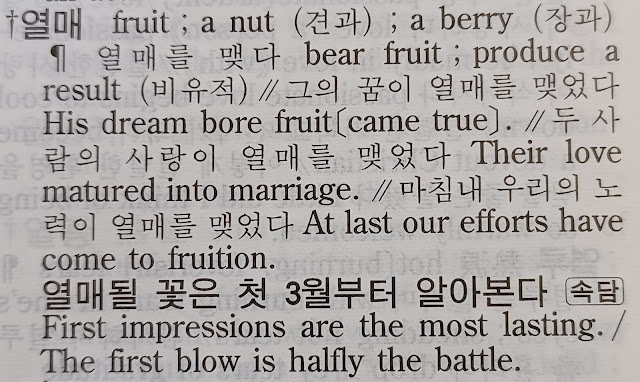
What's the difference between 과일, 과실 (果實), and 열매?

 ANSWER: 과일, 과실 (果實), and 열매 all refer to the fruits of plants, but 과일 refers only to edible "juicy or succulent fruits" (apples, pears, grapes, etc.), 과실 to both edible "succulent" and "dry fruits" (nuts), and 열매 to all fruits, both edible and inedible.

My Korean-English dictionary shows that 과일 is a pure-Korean word, but it actually evolved from 과실 (果實), which is a Sino-Korean word, so at one time 과일 and 과실 meant the same thing, but over time, as mentioned above, 과일 has come to refer to only edible "juicy or succulent fruits," which the Chinese refer to as 水果 (수과 - water fruits). Both the Chinese and Koreans refer to "nuts" as 乾果 (건과), which literally means "dry (乾) fruits (果)."

The woman in the video below is showing how to write Chinese characters, and the example sentence she uses is the Chinese for "We eat fruit." I'm using the Korean pronunciations for the Chinese characters, not the Chinese. Also, I'm using the traditional characters, not the abbreviated forms.

We (我們 아문) eat (吃 흘) fruit (水果 수과).

The character 我 (아) means "I," but if it is followed by the plural marker 們 (문), it becomes "We." Since 水果 (수과) literally means "water (水) fruit (果)," the kind of fruit she is referring to is "juicy or succulent fruit," like apples and pears, not "dry (乾 건) fruit (果 과)," like nuts.


By the way, the Chinese word for "candy" is 糖果 (당과), which literally means "sugar (糖) fruits (果)."

From Dong-A's Prime Korean-English Dictionary

From Dong-A's Prime Korean-English Dictionary

From Dong-A's Prime Korean-English Dictionary

From Dong-A's Prime Korean-English Dictionary

Friday, January 07, 2022

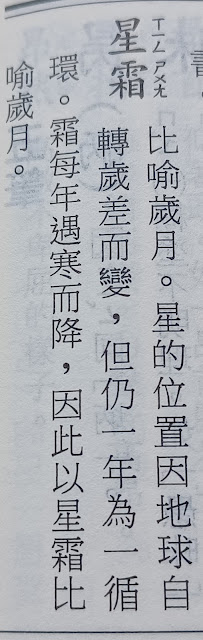
What does 성상 (星霜) literally mean?

 ANSWER: star (星) frost (霜)

My Korean-English dictionary defines 성상 (星霜) as "years" or "time," but it literally means "star (星) frost (霜)." The Chinese definition for 星霜 (성상) is 比喩歲月 (비유세월), which can translate as "a metaphor (比喩) [for] time or years (歲月)."

The following is a kind of poem I wrote about getting older, in which I used the phrase "star frost."

"My Time in the Sun," by Gerry Bevers

My mind is getting cloudy,
My body is getting stiff,
My soul is filling with star frost.

Ambition is just memories,
Women are just people,
Life is just survival.

Watching children play,
Seeing young people in love,
My time in the sun is over.


From Dong-A's Prime Korean-English Dictionary

From 新編國語日報辭典

Thursday, December 30, 2021

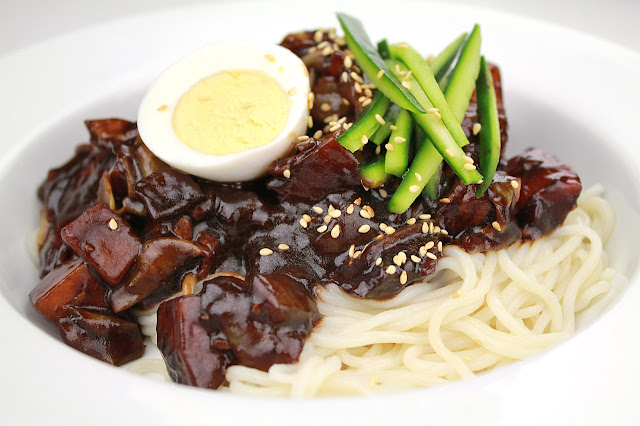
What does 자장면 (炸醬麵) literally mean?

 ANSWER: exploding (炸) soy sauce (醬) noodles (麵)?

The Chinese character 炸 (작) can mean "explode," as in the Sino-Korean word 작렬 (炸裂), which means "explosion," but the character can also mean "to fry." So, since 醬 (장) means "soy sauce," or "fermented soybean paste," and 麵 (면) means "noodles," 자장면 (炸醬麵) can literally translate as "fried (炸) soy sauce (醬) noodles (麵)."

Some may wonder why the noodle dish is called 자장면 (炸醬麵) instead of 작장면, given that the character 炸 is pronounced 작 in Korean. I wondered that, too. Well, since 자장면 is a Chinese dish, it seems that Koreans have decided to use the Chinese pronunciation of the character 炸, which is /ja/ (자).

By the way, the Chinese word 炸鷄 (작계) means "fried (炸) chicken (鷄)," not "exploding chicken."

From Dong-A's Prime Korean-English Dictionary

From Dong-A's Prime Korean-English Dictionary

Taken from an article on Wikipedia

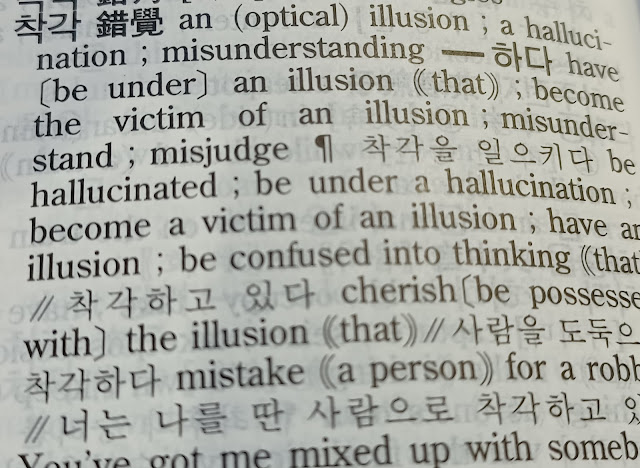
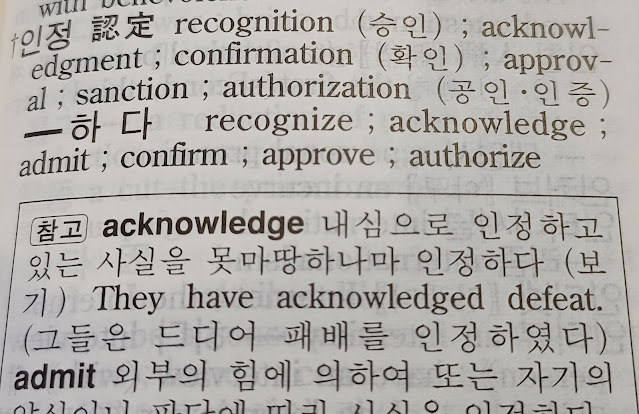
What does 자기작착 (自己作錯), 자기인착 (自己認錯) mean?

 ANSWER: [If] one (自己) makes (作) a mistake (錯), one (自己) [should] admit (認) the mistake (錯).

Lately, I have been trying to teach myself to read modern Chinese, but with Korean pronunciations. Why? Because learning Chinese characters (한자) in sentences and phrases is much more fun than learning them individually. 

I do not think 작착 (作錯) and 인착 (認錯) are phrases that Koreans use because the phrases are not in my Korean dictionary, but the individual Chinese characters are still characters that Koreans use, so even though Koreans may not be able to understand the above Chinese sentence when spoken, they should be able to understand its meaning when read, if they can read Chinese characters. Personally, I think the sentence sounds great when spoken in Korean: 자기작착, 자기인착.

From Dong-A's Prime Korean-English Dictionary

From Dong-A's Prime Korean-English Dictionary

From Dong-A's Prime Korean-English Dictionary

Wednesday, December 29, 2021

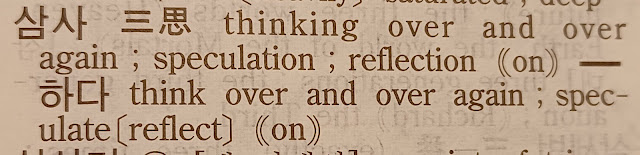
How important is marriage (결혼 結婚), which literally means "to join (結) in marriage (婚)"?

 ANSWER: I think it is at least a "3-thought" (삼사 三思) decision.

The Chinese character 三 (삼) means "three," and 思 (사) means "think" or "thought," so 삼사 (三思) can literally translate as "three (三) thoughts (思)" or "three times (三) think (思)," which means "to think carefully [about something]."

So, since the decision to get married is so important, one should give it more than just "a thought" (일사 一思) or even "a second thought" (이사 二思).

From Dong-A's Prime Korean-English Dictionary

Thursday, December 09, 2021

Can a sweet dream be sad?

ANSWER: Yes!

A disciple wakes up crying one late autumn night. His Buddhist master sees him crying and asks,

"Did you have a scary dream?"
"No."
"Did you have a sad dream?"
"No, it was a sweet dream."
"Then, why are you crying so sadly?"
"Because it was a dream I will never be able to realize."


The following two videos are from a 2019 interview with 이어령:
 

What does 문장 (文章) mean besides "sentence"?

 ANSWER: an essay or an article

My Korean-English dictionary shows that the first definition for 문장 (文章) is "a writing," "a composition," "an article," or "an essay," but I normally associate 문장 with "sentence," 기사 (記事) with "article," and "수필 (隨筆) with "essay," so I wonder why "an article" or "an essay" is listed as the first definition for 문장 in my dictionary? I don't think I have ever heard or seen Koreans use 문장 to mean "article" or "essay." Can anyone point to an example where Koreans have used 문장 to mean "article" or "essay"?

The Chinese, however, do seem to use 文章 (문장) to mean "article" or "essay," which made me wonder what word the Chinese use to mean "sentence" since they do not appear to use 文章 (문장) with that definition. From what I have found, the Chinese word for "sentence" seems to be 句子 (구자), a word that Koreans do not seem to use, and a word that literally means "a phrase (句) child (子)" or "a child of phrases."

From Dong-A's Prime Korean-English Dictionary

Tuesday, December 07, 2021

Does 汽車 (기차) mean "train" or "car"?

 ANSWER: In Korea, 汽車 (기차) means "train," but in China it means "car."

汽車 (기차) literally means "steam (汽) car (車)," which seems to be a good description of the early steam locomotives, so I wonder why in China a "steam car" refers to an automobile instead of a train? Instead, the Chinese word for "train" is 火車 (화차), which literally means "fire (火) car (車)."

By the way, the Chinese word for "taxi" is 計程汽車 (계정기차), which can literally translate as "journey calculating (計程) steam (汽) car (車).

From Dong-A's Prime Korean-English Dictionary

Friday, December 03, 2021

Is it possible to watch the following 최정원 performance without tearing up?

ANSWER: No! It's impossible.

"Hymne a l'amour" is a French love song that translates into Korean as "사랑의 찬가" ("Hymn of Love"). The French lyrics were written by the late French singer Édith Piaf after her lover, French boxer Marcel Cerdan, died in a plane crash in 1949. The song is a testament to how devastated the French singer was by her lover's death. 

There are different Korean translations of the French song: literal translations and translations that are meant to be sung. The following is my translation of the Korean version sung by Korean goddess Choi Jung-won (최정원):

"사랑의 찬가"
"Hymn of Love"

하늘이 무너져 내리고
땅이 꺼져 버린다 해도
Even though the sky comes crashing down,
Even though the earth collapses beneath me,

당신만 날 사랑한다면
내겐 두려움 없네
If you just say you love me,
I will have no fear.

사랑이 아침을 채우고
그 사랑 내 몸을 감싸면
If love fills my mornings,
If that love shields my body,

아무것도 두렵지 않아
당신이 날 사랑하니까
I will fear nothing
Because you love me.

"MARCEL"

하늘이 무너져 내리고
땅이 꺼져 버린다 해도
Even though the sky comes crashing down,
Even though the earth collapses beneath me,

당신만 날 사랑한다면
If you just say you love me, .  . .

세상 끝이라도
나는 갈거야
당신 원한다면
I will go to the ends of the earth
If that is what you want.

하늘에 달이라도
눈 부신 해라도
따다 바치겠어요.
Though it be the moon or the blinding sun,
I will pluck them from the sky and give them to you.

친구도 버리고
모든 걸 버리고
당신 원한다면
I will forsake even my friends,
I will forsake everything,
If that is want you want.

사람들 비웃어도 
뭐든 할 수 있어요
당신이 원한다면
Even though people ridicule me,
I can do it all,
If that is what you want.

운명이 우리를 갈라놓고
신께서 날 버린다 해도
Even though Fate divides us,
Even though God forsakes me,

당신만 날 사랑한다면
당신을 따를게요
If you just say you love me,
I will follow you.

우리 영원히 함께해요
We will be together forever.

끝없는 푸르름 속에서
행복뿐인 하늘에서
다시 만날 것을 믿어요.
In the endless blue,
In the pure happiness of heaven,
I believe we will meet again.

행복뿐인 하늘에서
다시 만날 것을 
In the pure happiness of heaven,
We will meet again.

다시 만날 것을
믿어요
I believe we will meet again.


Thursday, December 02, 2021

How much does 짝사랑 (one-sided love) weigh?

 ANSWER: 2.4 kilograms

When you are near someone you are secretly in love with (짝사랑), your heart tends to throb or palpitate, which means your heart tends to beat faster. The pure Korean word for "palpitating," "pitapat," or "throbbing" is 두근두근.

Since 두 is also the pure Korean word for "two," and 근 (斤) is a unit of weight measure that equals 600 grams, then 두근 + 두근 = 4 근, which adds up to 2.4 kilograms (600g x 4), right? So, if you are trying to lose weight, don't fall in love.

From Dong-A's Prime Korean-English Dictionary

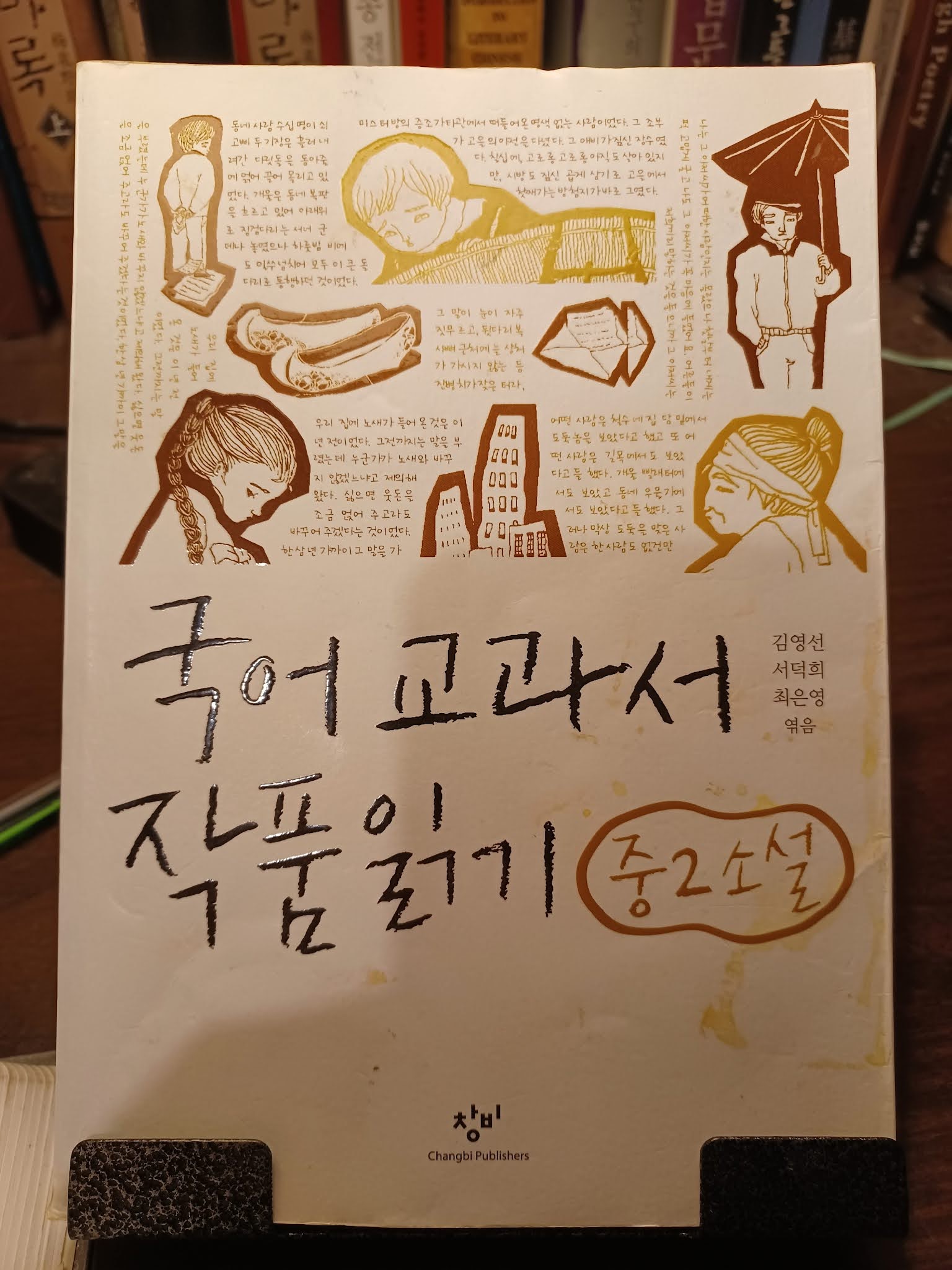
The following was written as an introduction to a story by 공선옥 entitled "일가," in a book entitled "국어교과서 작품 읽기 (중2 소설)."

Introduction to a 공선옥 story entitled "일가"