Sunday, April 27, 2025

Does 시쳇말 mean "dead language," "poetic language," or "popular language of the time"?

ANSWER: 시쳇말 is defined as "그 때에 유행하는 말," which could be translated as "popular [or fashionable] language [or expression] of the time."

시쳇말 is a combination of two words: 시체 and 말, which are connected with a 사이 시옷 (ㅅ). The 말 part of the word can be translated as "language" or "expression," but what does the 시체 mean? My Korean-English dictionary shows three possible choices: 1) "verse style," 2) "dead body," and 3) "the fashion of the day." In the case of 시쳇말, the third choice is the correct one.


Besides meaning "body," the Chinese character 體 (체) can also mean "form" or "style," so since 時 (시) means "time," the word 시체 (時體) can literally translate as "the time (時) style (體)."

The Korean video below says that 유행어 and 요샛말 are synonyms of 시쳇말 (時體말), but neither 유행어 nor 요샛말 have the "그때" (that time) in their definitions, so to use 유행어 to refer to "past" popular expressions (유행어)," one would have to say, "그때에 유행어."

The reason I am being so picking about the word 시쳇말 is that I recently came across it while reading a book entitled "내 몸 사용설명서" (YOU, The Owner's Manual). Here is the passage to which I am referring:


In the above paragraph, the writer refers to 꽃미남 (a young man as handsome as a flower) as 시쳇말, which seems a little vague to me. In other words, is the writer is referring to 꽃미남 as "a popular word" these days or in the past? If the writer is referring to 꽃미남 as a popular word these days, then I think it would have been clearer if he or she had written 요샛말 instead of 시쳇말 since 요새 means "recently" or "these days." Or maybe I just do not understand the use of 시쳇말 well enough.

By the way, what is a 시체양반 (時體兩班)?

ANSWER: It refers to rich, successful businessmen.  Already in the Korea of the 1930s, the "new yangban of the time" (시체양반) were the rich capitalists, the people with the money.

In his 1934 novel "고향," the author 이기영 wrote the following: "그는 아주 훌륭한 시체양반이 되였다," which could be translated as, "He has become a respected businessman." In old Korea, businessmen did not get much respect and were not usually called "yangban" (양반).


Finally, in the above video, the word 초주검 is mentioned. Since 초 (初) can mean either "first" or "the beginning" and 주검 means "corpse" or "dead body," the word 초주검 can literally translate as "the beginning of a dead body," implying that a person is near death.

Saturday, April 26, 2025

What does 용빼다 mean?

ANSWER: "큰 힘을 쓰다," which could be translated as "to use great strength."

By the way, why isn't 용빼다 in the dictionaries I normally use? It isn't in my Dong-A Prime Korean-English Dictionary or my 동아 새國語辭典. It is not even in my giant Si-Sa Elite Korean-English Dictionary (엘리트 韓英大辭典). I thought I had forgotten how to look up words in a dictionary until I finally found the word in a dictionary I hardly ever use.

Finally, in my 국어용례사전 (Korean Sentence Example Dictionary), I found 용빼다 defined as "큰 힘을 쓰다."

There is even a Korean idiom that uses the word: 용빼는 재간이 없다, which I would translate as "to be beyond one's ability to do no matter how hard one tries."
Again, why isn't 용빼다 in my other dictionaries? The first example under the word in my "Korean Sentence Example Dictionary" comes from a book entitled 馬上淚 (마상루), which was published in 1912. So, is the word 용빼다 just too old fashion for modern Korean dictionaries?


Friday, April 25, 2025

Why should you think of the 병 that means "sickness" and "disease" (病) before you think of the 병 that means "bottle" (甁)?

 ANSWER: Because out of the 133 keywords listed under 병 in my Korean-English dictionary there are only 5 that start with the 병 (甁) that means "bottle" but 60 that start with the 병 (病) that means "sickness" and "disease."

Keywords that start with the 병 (甁) that means "bottle":

  1. 병 (甁) bottle [under this keyword is listed 병맥주, which means "bottled beer"]
  2. 병마개 (甁--) bottle cap
  3. 병목 (甁--) the neck of a bottle
  4. 병배 (甁--) a bottle-shaped pear
  5. 병술 (甁--) bottled liquor
Here are the keywords that start with the 병 (病) that means "sickness" and "disease." By the way, words that start with the "sickness" and "disease" 병 (病) are pronounced with a long vowel sound, so /벼영/:
  1. 병 (病) a sickness; an illness; a disease
  2. 병가 (病家) a patient's house
  3. 병가 (病暇) sick leave
  4. 병객 (病客) a sick person; a patient
  5. 병결 (病缺) absence on account of (due to) illness
  6. 병고 (病故) an illness, a sickness, a disease
  7. 병골 (病骨) a sickly person; a feeble person
  8. 병구 (病軀) a sick body; ill health; a sickly constitution
  9. 병구완(病救援)하다 to nurse (a sick person). [Note: 병구완 was originally pronounced 병구원.]
  10. 병균 (病菌) a germ; a virus
  11. 병근 (病根) the cause of a disease
  12. 병나다 (病--) 1) to get sick; 2) to be out of order, to break down
  13. 병내다 (病--) 1) to make a person sick; 2) to put out of order, to cause a breakdown
  14. 병독 (病毒) disease germs; the virus poisons
  15. 병동 (病棟) a hospital ward
  16. 병들다 (病--) to get sick
  17. 병력 (病歷) the case history (of a patient)
  18. 병리 (病理) the pathology (of a disease)
  19. 병리학 (病理學) pathology
  20. 병리 해부학 (病理 解剖學) morbid (pathological) anatomy
  21. 병마 (病魔) the demon of ill health; (the curse) of a disease
  22. 병막 (病幕) a quarantine station (camp); an isolation hospital
  23. 병명 (病名) the name of a disease (malady)
  24. 병몰 (病沒) death from sickness = 병사 (病死)
  25. 병사 (病死) death from disease; a natural death
  26. 병사 (病舍) an infirmary; a hospital
  27. 병상 (病床) one's sickbed
  28. 병상 (病狀) the condition of a patient
  29. 병상병 (病傷兵) the sick and wounded (soldiers); the invalid soldiers
  30. 병색 (病色) a sick complexion; a sickly appearance
  31. 병석 (病席) a sickbed = 병상 (病床)
  32. 병세 (病勢) the condition of a disease (of a patient)
  33. 병소 (病巢) a focus (a localized area of a disease)
  34. 병소감염 (病巢感染) focal infection
  35. 병신 (病身) 1) a deformed person; a cripple; 2) a sickly person; a chronic invalid; 3) a stupid person; a fool; a dunce; 4) an incomplete (a defective) thing; an odd set
  36. 병신 구실 (病身 --) unworthiness; uselessness; behavior to be expected of a defective
  37. 병신성스럽다 (病身--) (be) foolish; silly; stupid; moronic
  38. 병실 (病室) a sick room; an infirmary
  39. 병약 (病弱) weakness; infirmity; delicate constitution
  40. 병와 (病臥) to sick in bed
  41. 병원 (病院) a hospital; an infirmary; a nursing home
  42. 병원 (病原) the cause of one's illness; the origin of a disease
  43. 병인 (病人) a sick person
  44. 병인 (病因) the cause of a disease; an etiological cause (factor)
  45. 병자 (病者) a sick person; a patient
  46. 병적 (病的) morbid; diseased; unsound; pathological; abnormal
  47. 병점 (病占) [a fortuneteller) predict (foretell, prognosticate) the course of a disease
  48. 병주머니 (病--) a person with many (chronic) diseases; a bag of woes
  49. 병중 (病中) during one's illness
  50. 병증 (病症) the nature of a disease (an illness)
  51. 병집 (病--) 1) a weakness; the trouble with (a person); a flaw; 2) the cause of a disease
  52. 병주기 (病--) a sickly person; an invalid
  53. 병충해 (病蟲害) damages by blight and harmful insects
  54. 병태 (病態) the condition (of a patient)
  55. 병통 (病--) trouble (with a thing); malfunction; something wrong (with); a hitch
  56. 병폐 (病廢) disablement (deformity) by an illness or disease
  57. 병폐 (病弊) an evil; a vice; evil practices; abuses
  58. 병해 (病害) blight (농작물의)
  59. 병환 (病患) [your, his] disease; illness
  60. 병후 (病後) convalescence; the convalescent stage
Besides the 5 병 (甁) that mean "bottle" and the 60 병 (病) that means "sickness" and "disease," there are also 40 keywords that start with the 병 (兵) that means "soldier" or "weapon." That means that those three 병s make up 105 of the 133 keywords in my Korean-English dictionary that start with 병. And of remaining words, only one is a pure-Korean word: 병아리 (a chick). The rest start with one of the following 병:
  • 병 (丙) the third; the third of ten Heavenly Stems
  • 병 (竝) together; side by side
  • 병 (倂) merge; combine
Finally, the 병 in all the keywords are pronounced as /벼영/, except for the words that start with the "bottle" 병 (甁), the "soldier" or "weapon" 병 (兵), and the pure-Korean 병 in 병아리.

Also, for fun, 병아리오줌, which literally means "chick urine," translates as either "a chickenhearted person," "a dull conservative person," or "a stick-in-the-mud," but a better translation would probably be "chicken-poop" but with the S-word replacing poop. Chickens do everything from one hole, including laying their eggs.

REMEMBER: I have only listed the 병 keywords that are in my Korean-English dictionary. My Korean dictionary has a few others. 

Wednesday, April 23, 2025

How many 되s make a 말?

ANSWER: Ten 되s make a 말 (mal). And since ten 홉s make a 되, 100 홉s make a 말. And, by the way, 10 말s make a 섬, which is a big straw sack. So, five 말s of rice is equal to half a sack (섬) of rice.

섬, 말, 되, and 홉 were measurements used in Korea to measure grains. They are all pure-Korean words. Their Chinese character equivalents are 石 (석), 斗 (두), 升 (승), and 合 (합).


The Sino-Korean word 오두미 (五斗米) literally translates as "five (五) mal (斗) of rice (米)" but is used in Korea to mean "a small salary," referring back to a time when Korean government officials were paid in rice and other grains. Five mal of rice is equal to half a sack (섬) of rice. Imagine trying to live off of that for a year.


By the way, when Sino-Korean words start with the character 五 (오), the 오 is pronounced with a long vowel sound, so 오두미 (五斗米), for example, is pronounced as /오오두미/. Here are other Sino-Korean words that start with of 오 (五), which means the 오 is pronounced as /오오/.

  • 오각형 (五角形) a pentagon
  • 오감 (五感) the five senses
  • 오경 (五經) the five classics (of ancient China)
  • 오계 (五戒) the five Buddhist commandments (against murder, theft, adultery, falsehood, and intemperance)
  • 오곡 (五穀) the five grains (rice, millet, beans, wheat, and barnyard millet)
  • 오관 (五官) the five sensory organs
  • 오뉴월 (五六月) May and June of the lunar calendar
  • 오대양 (五大洋) the Five Oceans
  • 오대주 (五大洲) the Five Continents
  • 오륜 (五倫) moral rules to govern the Five Human Relations (of master and servant, of father and son, of husband and wife, of brothers, of friends)
  • 오리 (五里) five ri (Korean miles)
  • 오리무중 (五里霧中) literally means "five (五) ri (里) in a fog (霧中)" but is used to mean "utter bewilderment."
  • 오만 (五萬) literally means "fifty thousand," but is used to mean "innumerable."
  • 오만상 (五萬相) a distorted [frowning, wry, puckered)] face; a grimace; a scowl
  • 오미 (五味) the Five Tastes (of sour, bitter, pungent, sweet, and salty)
  • 오배 (五倍) five times (as many as), fivefold
  • 오복 (五福) the Five Blessings (longevity, wealth, health, love of virtue, peaceful death)
  • 오분 (五分) 1) to divide into five parts, 2) five minutes
  • 오색 (五色) the five cardinal colors (blue, yellow, red, white, black); variegated colors
  • 오색잡놈 (五色雜놈) a reprobate; a rogue; a scamp
  • 오십 (五十) fifty
  • 오언절구 (五言絶句) a quatrain with five Chinese characters in each line
  • 오열 (五列) the Fifth Column; secret agents
  • 오월 (五月) May
  • 오일 (五日) five days; the fifth day of the month
  • 오장 (五腸) the five viscera (of the heart, liver, spleen, lungs, and kidneys)
  • 오장육부 (五腸六腑) the five viscera and the six entrails (of gall bladder, stomach, small and large intestines, the paunch, the bladder, and the bowels)
  • 오채 (五彩) the five colors
  • 오체 (五體) the (whole) body; the whole frame; the limbs
  • 오촌 (五寸) one's cousin's son (daughter); one's father's cousin
  • 오층 (五層) five stories (floors, levels); the fifth floor
  • 오행 (五行) the Five Elements (metal, wood, water, fire, earth)
  • 오현금 (五絃琴) a five-stringed musical instrument; a pentachord

Tuesday, April 22, 2025

What does 열 일 mean?

 ANSWER: "All work," "all things," or "everything."

The 열 in 열 일 is the pure Korean word for "ten," and 일 is the pure Korean word for "work," but the 열 in 열 일 is translated as "all," not as "ten." Why? Because when you count from 1 to 10 on your fingers, 10 is "all" of your fingers. It is similar to saying 만사 (萬事) or 백사 (百事), which literally mean "ten thousand things" and "a hundred things," respectively, but are translated as "all things." By the way, be sure to put a space between the 열 and the 일 when writing "열 일."

The Korean idiom 열 일을 젖혀놓다 can translate as "to put all work aside," implying that one does so in order to focus on something else. The verb 젖히다, which is pronounced as /저치다/, is a little strange since it has four very different meanings in my dictionary, but the meaning used in the idiom here is the fourth one. If you do not like the verb 젖히다, you can substitute the verb 제치다, which seems to be more popular.

Here are some example sentences from Naver's Korean-English dictionary:

  • 그는 내가 어려울 때면 열 일 제쳐 두고 도와 주러오곤 했다.
    He would drop everything else and come running to help me in my hour of need.

  • 나는 열 일을 제쳐 두고 그를 찾아갔다.
    I put aside all my work to go see him.

  • 오늘은 열 일을 제쳐 놓고 잠부터 자야겠어요.
    Today, I am going to sleep before I do anything else.

Sunday, April 20, 2025

Did Koreans used to feed their dogs in the morning or the evening?

 ANSWER: Probably in the evening.

개밥 means "dog (개) food (밥)," and a 바라기 is "a small porcelain food dish," so 개밥바라기 literally translates as "a small dog-food dish," but Koreans use the phrase to refer to the planet Venus. Why?
Venus can also be called either "the evening star" or "the morning star," depending on when it appears in the sky. In the early evening, it appears in the western sky and can then be called "the evening star." In the early morning, it appears in the eastern sky and can then be called "the morning star."
Koreans use 개밥바라기 to refer to Venus when it appears in the western sky in the early evening, so that suggests that Koreans normally used to feed their dogs in the evening, probably with food scraps collected throughout the day. Besides 개밥바라기, Koreans also refer to "the evening star" as 어둠별 (dark star), 태백성 (太白星), and 장경성 (長庚星).
The word that Koreans use to refer to Venus when it appears in the early morning sky is 샛별, which is probably an abbreviation of 새벽의 별 (morning star) since 샛바람 means "an easterly wind." Another name for "the morning star" is 계명성 (啓明星), which literally means "opening (啓) bright (明) star (星)," but since "bright star" (明星) is just another name for "morning star," it can literally translate as "opening morning star."

Saturday, April 19, 2025

What is the Sino-Korean word for "seasickness"?

 ANSWER: 선훈 (船暈)

The pure Korean word for "seasickness" is 배멀미, which literally means "boat (배) nausea (멀미)," but the Sino-Korean word is 선훈 (船暈), which literally means "boat (船) dizziness (暈)." Interestingly, at least to me, the Chinese word for "seasickness" is 暈船 (훈선), which literally means "dizzy (暈) boat (船)." The character 暈 (훈) can also mean "halo."
By the way, there are not many Korean words that start with 섣, which is pronounced with a long vowel sound, so /서어ㄷ/.


Thursday, April 10, 2025

What does 잡아떼다 and 시치미떼다 have in common?

ANSWER: They can both mean "to feign ignorance" or "to play innocent."

잡다 means "to grasp" or "to take hold of," and 떼다 means "to remove" or "to take off," so 잡아떼다 literally means "to grab [something] and remove [it]." So, why can 잡아떼다 also mean "to feign ignorance" or "to play innocent"? In other words, what is the relationship between "removing something" and "playing innocent"?
ANSWER: 잡아떼다 is just another way of saying 시치미떼다, which literally means "to remove a 시치미." But what is a 시치미?
A 시치미 was an identification tag that Koreans who hunted with falcons used to attach to a tail feather of their falcons. The tag identified the owner of the falcon and where its owner lived in case the falcon ever got lost. Anyone who found the lost falcon could then return it to its owner.
However, apparently some people who found a lost falcon would sometimes remove the 시치미 and keep the falcon. If the real owner later came along and asked the person who found the falcon if the falcon had had an identification tag on it, the person who removed the tag would lie and say, "No."
I have read that although 잡아떼다 and 시치미떼다 both essentially mean "to lie," 잡아떼다 is a more determined lie.


Friday, April 04, 2025

Are 강권 (强權) and 강권 (强勸) pronounced the same?

 ANSWER: No.

This morning, I noticed a mistake in my Korean-English dictionary, in regard to the Korean words 강권 (强權), which literally means "strong (强) authority (權)," and 강권 (强勸), which literally means "strongly (强) recommend (勸)." So, what is the mistake?
ANSWER: The mistake is that the phrases 강권발동, 강권정치, and 강권주의 should be listed under 강권 (强權), not under 강권 (强勸).
Some may say, "So? What's the problem? 강권 (强權) and 강권 (强勸) are both pronounced the same, so the underlying Chinese characters would not make any difference in conversation. But the problem is that the words are NOT pronounced the same.
강권 (强權) is pronounced /강꿘/, and 강권 (强勸) is pronounced /강권/, so the phrases 강권발동, 강권정치, and 강권주의 should be pronounced /강꿘발똥/, /강꿘정치/, and /강꿘주의/, respectively.

Monday, February 10, 2025

What happens to "winter bugs" (冬蟲 동충)?

 ANSWER: They turn into "summer grass" (夏草 하초), which essentially means they turn into mushrooms.

In Korea, if a dead bee turns into a mushroom, it is called a 벌동충하초. If the larva of a silkworm turns into a mushroom, it is called a 번데기동충하초.

Cordyceps militaris in Arkansas | Mushroaming - Daniel Winkler's Webpages Dedicated to Mushrooms and Nature Tours

Thursday, January 16, 2025

What's the difference between 오호 and 오호호?

ANSWER: One means "Alas!" and the other means "Ha ha!"

오호 (嗚呼) means "Alas!" and is said when something sad happens. 오호호 means "Ha ha!" and is said when something funny happens. Don't get the two confused.


By the way, in China, the idiom 一命嗚呼 (일명오호) means "to die," though it literally translates as "A life (一命), alas (嗚呼)!"


Friday, January 03, 2025

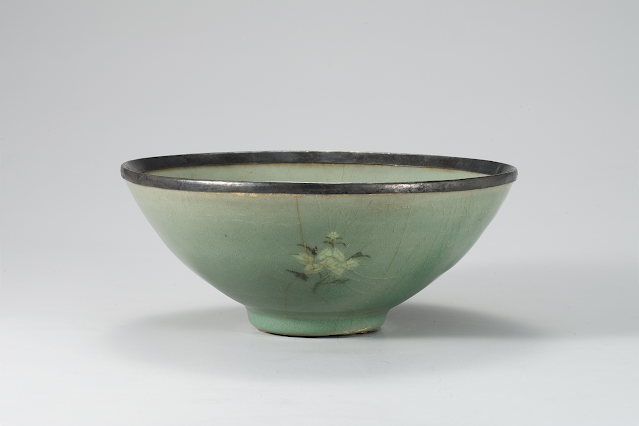
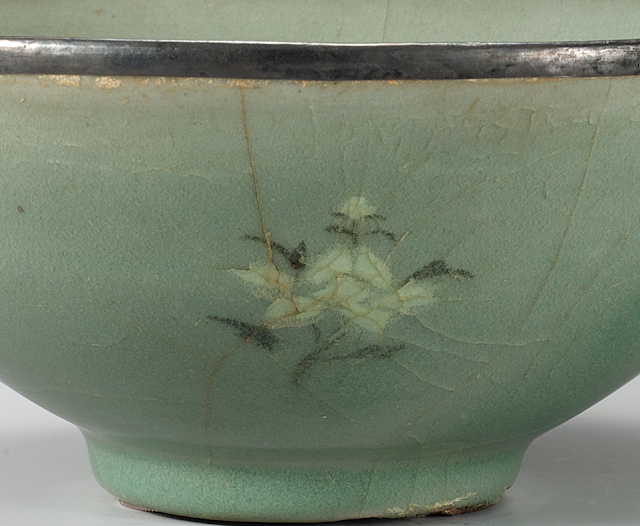
What is the Korean name of the bowl in the photo below?

 ANSWER:

청자양각연화당초상감모란문은구발
靑磁陽刻蓮花唐草象嵌牡丹文銀釦鉢

LINK


What's the difference between 입을 축이다 and 목을 축이다?

ANSWER: One means to drink one's fill of something while the other means to drink less than one would like.

입 can mean either "mouth" or "lips," and 목 can mean either "throat" or "gullet," so since 축이다 means "to wet" or "to moisten," 입을 축이다 literally means "to wet one's lips or mouth" while 목을 축이다 literally means "to wet one's throat or gullet." That means that one needs to drink more to wet one's throat than to just wet one's lips and mouth. Therefore, 목을 축이다 implies that one drinks one's fill of something while 입을 축이다 implies that one does not drink as much as one would like. 


Thursday, December 12, 2024

What do 객 (客), 객 (喀), and 객 (䘔) all have in common?

 ANSWER: They are the only 객's in the Korean language.

The Chinese character 客 (객) means "a guest," but it can also mean "extra," superfluous," or "uncalled for." And 喀 (객) and 䘔 (객) both mean "to vomit" or "to spit," though the character 䘔 (객) suggests vomiting "blood" (血 혈).

Here are some interesting Korean words with the character 客 in them:

  • 객식구 (客食口) a hanger-on
  • 객설 (客說) or 객소리 (客소리) useless or idle talk
  • 객귀 (客鬼) the ghost of a man who died while staying abroad
  • 객기 (客氣) ill-advised bravery or rashness
  • 객년 (客年) last year
  • 객담 (客談) idle talk
  • 객동 (客冬) last winter
  • 객랍 (客臘) last December
  • 객비 (客費) "wasteful expenses" or "travel expenses"
  • 객사 (客死) to die in a foreign land
  • 객수 (客水) "unwanted rain," "unwanted water," or "water drunk at times other than meal times (extra water?)." By the way, in China (水客 수객) can mean "smuggler," "boatman," "fisherman," or "itinerant trader."
  • 객수 (客愁) homesickness 
  • 객월 (客月) last month
  • 객정 (客情) a traveler's lonely feelings
  • 객중 (客中) on one's journey, in transit
  • 객쩍다 (客쩍다) to be uncalled for, be out of place
  • 객추 (客秋) last autumn
  • 객춘 (客春) last spring
  • 객토 (客토) the soil brought from another place (to improve the soil to which it is brought)
  • 객향 (客鄕) a strange land
  • 객회 (客懷) homesickness, nostalgia
And here is one Korean word with the character 喀 (객) in it:
  • 객혈 (喀血) to spit (cough up) blood, a hemorrhage of the lungs
I did not list all of the Korean words with 객 (客) in them, but I think that is enough to show that the 객 sound in any Korean word comes from either the Chinese characters 客, 喀, or  䘔. And that means, as far as I know, that there are no pure Korean words with the sound 객 in them.

After writing this, I feel a little thirsty, so now I think I will drink some 객수 (客水).

Thursday, November 28, 2024

Does 馬脚 (마각) mean "horse's foot" or "horse's leg"?

 ANSWER: Well, in Korea, 馬脚 (마각) means "horse's (馬) leg (脚)," but in China, it means "a horse's foot" or "hoof," though there seems to be some confusion since 脚 (각) can mean both "leg" and "foot" in certain regions of China.

I have read, however, that in Mandarin Chinese, 脚 (각) is usually used to mean "foot" or "feet," such as in 小脚 (소각), which literally means "small (小) feet (脚)," and 大脚 (대각), which literally means "big (大) feet (脚)." In China, the word 小脚 (소각) refers to "bound feet," feet that have been deformed by the old Chinese practice of binding women's feet to make them look smaller. Women with small feet were considered to be more beautiful in ancient China. And the word 大脚 (대각) refers to "naturally formed feet," which apparently were considered to be ugly for a woman.

There seems to be two Chinese words for "foot-binding." One is 裹脚 (과각) and the other is 纏足 (전족) and both of them literally mean "to wrap or package (裹/纏) feet (脚/足)." The Chinese character 足 (족) can also mean "foot" and is the character that Koreans prefer to use for "foot." So, Koreans usually use the Sino-Korean word 전족 (纏足) to refer to "foot-binding."

Anyway, the idiom 마각을 드러내다 literally means "to show or expose horse feet" or "a horse foot" but is used to mean "to reveal one's true character," seemingly in a negative way. So, 마각 (馬脚) can mean either "horse feet" or "one's true character."

I have read that the expression 마각을 드러내다 comes from a story about the wife of the founder of China's Ming Dynasty. Her family name was supposedly 馬 (마), which is also the character used to mean "horse." Ms. Ma supposedly had "big feet" (大脚), meaning that her feet had not been bound and deformed when she was a child. Ms. Ma was ashamed of her unbound feet because only ugly women had unbound feet in ancient China. Therefore, Ms. Ma always tried hide her "big feet," probably by wearing long gowns. However, one day while getting out of a carriage, Ms. Ma's "big feet" were exposed, revealing her secret or "true character" to the public, which supposedly caused people to start referring to "unbound feet" as 馬脚 (마각).

However, the story does not make sense to me. First, why would the founder of the Ming Dynasty marry a woman with "big feet"? Second, feet that have been deformed by binding look more like "horse feet" than feet that are naturally formed. So, I think that Ms. Ma probably had bound feet, not unbound feet, and that on that day she forgot to put on her fancy shoes before getting out of her carriage, thereby exposing her deformed "horse feet" to the public.


Saturday, November 23, 2024

Does 재봉도구통 mean "housewife"?

 ANSWER: Well, according to my Korean-English dictionary it does.

재봉 means "sewing," and 도구통 can translate as "tool kit." So, instead of  재봉도구통 meaning "housewife," wouldn't a better translation be "sewing kit," unless it is also used as some kind of slang expression? Korean does have a lot of crazy slang, but "a housewife" is actually English slang for "a sewing kit."

By the way, why did they translate 여자는 as "She" in the example sentence 여자는 재봉을 잘한다? I would have translated 여자는 as "Women," but if a previous sentence had mentioned a particular woman, then I guess 여자는 could be referring to a particular woman. In other words, "She" could have been used to contrast a particular woman with a particular man, a man who is not good at sewing.

Finally, besides meaning "professor," the word 교수 can also mean "teaching" or "instruction," which is why 재봉 교수 is translated below as "instruction in needlework." Personally, I have never met a "sewing professor."

Friday, November 15, 2024

What does 우리부부 mean, again?

 ANSWER: It literally means "my husband and wife," but . . . .

Today, I was reading my favorite Korean bathroom book when I came across the phrase "우리 부부," which literally means "my husband and wife" but is used by Koreans to mean "my spouse." I am reading this book for the third time, by the way, so I had come across the phrase before, more than 15 years ago, and then wrote about it here in this blog but today did not remember doing it, so I Googled "우리부부" and was reminded of that fact. I guess it still bothers me.

Anyway, HERE is the link to that 15-year-old post. And below are photos of my favorite bathroom book and the page in the book where "우리부부" was mentioned. I have also included a screenshot of my Google search.


Sunday, November 10, 2024

Do "aliens" (외계인) know when to go to the bathroom?

ANSWER: Apparently not.

In the story below, a grandmother has "dementia" (치매), which apparently causes her to forget when to go to the bathroom, a symptom Koreans describe as "대소변을 가리지 못 하다." The word 대변 means "feces," and the word 소변 means "urine," so 대소변 can translate as "feces and urine" or "urine and feces." The word 가리다 can translate as "to choose," "to select," or "to discriminate," so 대소변을 가리지 못 하다 literally translates as "unable to discriminate urine and feces," which implies that a person does not know when to go to the bathroom. That means that a person with such a problem will go to the bathroom wherever he or she just happens to be. 

The girl in the story below, who is about to graduate middle school, talks about how her grandmother gets up in the middle of the night and turns their house into a 쑥대밭, which literally means "mugwort (쑥) and bamboo (대) field (밭)" but implies an overgrown, uncultivated plot of land or, in other words, a wasteland. Except that in this case, the girl seems to be implying that the wasteland in their house is made up of feces and urine.

The girl also talks about how her grandmother these days follows them around the house all day "whining" (칭얼대다) for them to play with her, something the girl does not remember her grandmother doing when the girl was younger. So, the girl starts to think of her grandmother as being "a strange alien being" (낯선 외계인) and wonders what happened to the grandmother she used to know, the one who used to love and take care of her and read her bedtime stories when she was a little girl. 

I like this story, and I like the way it is told, though I think the use of the word 외계인 to describe the grandmother is a little immature for a girl who is about to graduate middle school. Use of the word would make more sense if the girl were only about five or six years old. A girl in middle school should be able to understand what dementia is and what it does to people. Nevertheless, this story still brought a tear to my eye. 


Thursday, November 07, 2024

What smells worse than a "rice fart" (쌀방구/쌍방귀)?

ANSWER: A "barley fart" (보리방구/보리방귀).

Koreans apparently used to believe that the more barley you ate the more you farted. They also apparently believed that your farts smelled worse if you ate rice with barley mixed in it. So Korean school kids in the past probably wouldn't have wanted to share a 2-person school desk with a poor kid who ate rice with a lot of barley in it, especially if that kid rarely washed his hair and had body odor that smelled like a "cesspool" (시궁창). In Korea, poor people used to mix barley in with their rice because barley was cheaper than rice.

Now imagine that your teacher makes you and the students in your class change "desk partners" (짝꿍) once every month. Last month the girls got to choose the boy they wanted to sit next to in class, and this month the boys are supposed to choose the girl they want to sit next to. The "barley-farter" (보리방쥐쟁이) in this class is 조수택, who works after class delivering the "evening newspaper" ( 석간신문). Which girl will he choose to sit next to, and how will that girl react?

In the past, when 조수택, who is better known as "보리방구", was assigned a new desk partner, the new partner would always ask the teacher for a different partner, but the teacher always refused until 조수택, sensing that the student didn't want to be his desk partner, asked the teacher himself if he could sit alone in the back because it would help him study better since it would give him more room to hang his bag on his chair and more room to spread out his elbows on his desk.

So, which girl in class will 조수택 choose to sit next to, and how will that girl react? The only hint that I will give you is that there are a lot of sad stories in Korea.

By the way, the adjective 멋쩍다 means "to feel embarrassed, awkward, or uncomfortable," but 멋 by itself can mean "taste," "charm," or "elegance," and "-쩍다" means "to feel" or "to have a feeling," so why does 멋쩍다 mean "to feel embarrassed or awkward" instead of "to feel charming or elegant"? I am not sure, but maybe the word 쩍다 here is a dialectical pronunciation for 적다, which can mean "few" or "little." So, maybe 멋쩍다 literally means 멋이 적다, which could translate as "lacking charm or elegance," and that would imply "awkwardness."


Sunday, October 27, 2024

What does 습자지 mean?

ANSWER: writing paper 습자지 (習字紙) literally translates as "practice (習) characters (字) [writing] paper (紙)," which means it was writing paper used in school to practice writing Chinese characters. Apparently, students in Korea back in the 1930s, and probably earlier, were supposed to bring such writing paper with them to school. They were also supposed to pay a monthly tuition fee known as 월사금 (月謝金), which literally translates as "monthly (月) gratuity (謝金)." The Chinese character 謝 (사) means "to thank (someone)."
Anyway, today I read a Korean short story written by Paek Sin-ae (백신애), who most likely wrote it in the 1930s since she died in 1939 at the relatively young age of 31. It is a story of two 12-year-old friends (11 years old in Western age) who had to end their friendship when the father and family of one of them were forced by poverty to move to Manchuria to try to find work. It was a sad parting since both of the friends seemed to know that they would most likely never see or hear from each other again. The friend staying behind feared that his friend going to Manchuria would be killed on the road by 마적 (馬賊), which translates as "bandits on horseback." I was moved by the story, and I will definitely add it to my list of "Favorite Korean Short Stories." The Korean story is posted below: